Monday, 20 January 2014

Is Machiavelli's the Prince Still True Today?


Your Prompt: Machiavelli said that rivers and men can be controlled, but cannot be trusted. Discuss what this statement means and whether or not you think it is true. How Machiavelli’s position on how a leader (or prince) should behave reflected in today’s society (or, how is it NOT reflected in today’s society)? Be specific. This is an informal writing assignment in regard to tone, style, diction, etc. Please try to include a hyperlink AND an image or video. Please include at least one hyperlink and an image or video.


I believe that by saying this, Machiavelli means that leaders could easily control their people, but cannot necessarily trust them or win their trust. It is unwise for a ruler to trust his people completely because he can never be sure if they are genuine. Therefore, it is better for a Prince to use force to control his men, and he should not hesitate to use violence, be seen as a miser, go back on his words or do any other vice to hold on to his power. This also ties in to his belief that, as a ruler, it is better to be feared than to be loved. It is never a good idea to rely solely on the people's love, for human hearts change quickly and most people judge others by their appearance rather than their true character.


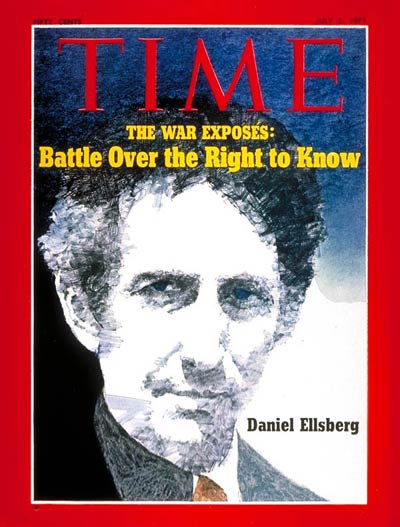
In my opinion, what Machiavelli believed in was true in his time, and still has its reasons today. Nowadays, most nations in this world have embraced democracy, and people are no longer mere subjects before their King. However, we can often see that there is not complete trust between the government and their people. The government of the United States of America, who claims itself to be one of the most democratic of all, has a long history of creating distrust in their people. In 1971, while the Vietnam War was still raging, the New York Times released the partial contents of the Pentagon Papers, confirming many Americans' fears and speculations on the government's real intentions and actions in Vietnam, and fueling a wave of anti-government protest across the nation. Likewise, in 2013, Edward Snowden disclosed the National Security Agency's massive international surveillance program, Prism, and planted even more distrust in the hearts of the already wary people around the world. The US government is constantly criticised for its distrust and lies to its people. But according to Machiavelli, the leaders in Washington have good reasons for what they did, because as he had stated, sometimes to control and even protect the people, a Prince has to break his promises and do seemingly wrong deeds. Whichever side of the argument is true, it is clear that there cannot always be trust between the ruler and the people.


http://www.pcinpact.com/news/80720-de-nsa-aux-entreprises-americaines-nage-en-eaux-troubles.htm

http://nsarchive.files.wordpress.com/2010/12/ellsberg_time1.jpg


Justification for Prism:

http://www.aljazeera.com/news/americas/2013/07/201371704225666982.html
 Machiavelli on Change and Trust

Humans by nature have a want to control their lives and make their own decisions, just like rivers flow uncontrollably in a certain direction. The power of a ruler can no more change the wants and needs of men than make the sky turn green. I think that this statement qualifies as the most relevant in context to the human condition.

To trust someone is to be chained to them, to trust no one is to free. We change our minds every minute of everyday, and with those changes there are consequences. The fact of the matter is that trust can never be carved into stone, nor can love or intelligence. These things are constantly changing because we as human beings are never constant."Rivers and men can be controlled, but not trusted" encompasses some of the most important things we need to know if we have any desire to survive. We need to know how to gain control and manipulate other people and different situations, we need to understand the dangers of having power at the tips of our fingers, and ultimately we need to learn and grasp the concept that you can never trust anyone but yourself. In the end we all look out for number one, that person being yourself, and if you cannot do that or won't, then you will not survive. So, when do the ends justify the means in this case? In my opinion they never do, because if I'm honest with myself, I can think of a handful of people that I would at least want to put ahead of myself in any situation. But there are those who believe that looking out for number one means that they are following the belief of natural selection; if you can't adapt, you won't live. Maybe in that context ends always justify the means.

Generosity is one thing, Machiavelli instructed, that could be overlooked when in the position to rule. But leaders in this day and age, on average, are very accepting and generous people. There is more of an allowance for people to incite change to improve their conditions, and to control who or what governs their country. For example, in Canada we have free health care because our leaders believe in equality for all classes. Whereas in the United States, health care expenses can be the largest debts for families because they believe in working to get what you need.


Response to Machiavelli's The Prince

Machiavelli's The Prince

In Machiavelli’s The Prince, he stated that rivers and men can be controlled but cannot be trusted. I believe that what he means by this is that one can bribe, entice or force someone into doing something, but cannot trust them in real circumstances. I think that in some cases, what Machiavelli states is true. There are situations in various situations where the only way that you can work with someone and have some element of trust is when both parties know that there is something in it for them. However, this is not true in all aspects of life. In some cases, people will not trust those who are constantly using bribery to get others to trust them. Machiavelli’s thoughts on the ideal prince are somewhat reflected in today’s society by people in political power. Machiavelli stated that although some princes may not have all the qualities that he believed were essential, they should appear to have them, lest they lose their power. For modern politicians who are in the face of modern media, appearance is crucial for them to keep their positions of power. There are very few politicians who are truly universally loved. There are countless people who run for Prime Minister or President who try to present themselves as likable, although very few succeed. I believe that politics has changed over the course of five hundred years, and now people are so skeptical of the intentions of said politicians that they try not to love them. I believe that although they are neither feared nor loved, these modern “princes” have created a sense of awe around their character. This correlates to what Machiavelli wrote of five hundred years ago, and it is still present today. 


The nature of change

It is exceedingly difficult to read Machiavellian literature and disagree with it.  Although he writes about princes, an obsolete and outdated leadership position, every single measly point that arises in his work is valid and can be applied to the contemporary world. The prince, whom he uses as a figure of leadership in this piece, is nothing more than an interchangeable symbol: it can be attributed to any single person or organisation in a position of authority.  In his quote, “rivers and men can be controlled, but cannot be trusted”, he is showing the reader how timeless his ideals really are. By comparing men to rivers, he is contrasting a gargantuan force of nature, a torrent of rushing water that has been present for millennia upon millennia, to a simple, common human being, who will live only a few decades.

Upon looking at said quote, this is what I initially thought. After thorough reflection however, I realised that the meaning of his quote was much deeper, much more profound than that. When he mentions the river, he does not mean the flowing water within it, and when he pontificates about man, he is not referencing a specific person or humanity in general; he is referring to the driving force between the two, something so mysterious and divine that no one can truly understand the workings of it. One can divert or dam a river for power or agriculture, just as one can bribe or deceive another for wealth or power, but no single man, no single species even, can ever dream of understanding the true driving force of either. As stated by the butterfly effect, the flutter by the wing of such a seemingly insignificant insect could possibly lead to the next category 5 hurricane, destroying every individual dam in its path that were so ingeniously constructed to survive them.  A form of this effect can be applied to humans, by having such an insignificant event so far away cause something as devastating as the death of a loved one, or the mental breakdown of another. None of these occurrences can ever be predicted, for that would require an intricate understanding of how ever single atom in the known universe interacts with each other, which would breach the limits of what is physically possible. All in all, Machiavelli postulates that we can control rivers and men, but we cannot trust them, because they are prone to change, and we have no idea how they really work.


Sunday, 19 January 2014

Machiavelli prompt

Machiavelli said that rivers and men can be controlled, but cannot be trusted. Discuss what this statement means and whether or not you think it is true. How Machiavelli’s position on how a leader (or prince) should behave reflected in today’s society (or, how is it NOT reflected in today’s society)? Be specific. This is an informal writing assignment in regard to tone, style, diction, etc. Please try to include a hyperlink AND an image or video. Please include at least one hyperlink and an image or video.


First of all, I completely agree with this statement. Using the metaphor of a river, rivers flow. They are a large mass that generally goes in one direction all the time, and they can be controlled, they can be tamed. With the placement of dams we can tell the rivers what to do and where to go, but we cannot trust them. Rivers are dangerous, rivers are stronger than us, rivers show no mercy. When a river decides to flood, it floods; when a river decides to pull you under, you go under. Men are just the same.

From a point of power, men are your river. You control them and you direct them where you want them to go. You give them what you want to give them, and you deter those that ask for more by whatever means you like. Everyone has secrets, and as the figurehead of a community or society everyone wants to expose everything about you. The problem is, the more you know the more power you have, and as a leader you don't want that power to be shared among the masses.

Men can be controlled, but cannot be trusted. When you lend your trust in its entirety to another individual, you are at full mercy of said individual. And people as individuals are greedy, and conceited. A leader, especially a prince, has a lot to lose, number one on the list would be reputation. It is the leader's job to maintain that reputation and the easiest way to do so is to not lend out your trust to the masses. If the objective is to remain in power, in control, then you have to control.

In today's society, politicians practice the very same position Machiavelli had. They lie, they cheat, they steal, and if someone rises against them they get rid of them. It may not be the 'right' thing to do, but it is human nature and it is what is needed to be done to remain in a position of power.

So yes, rivers and men can be controlled, but cannot be trusted.


Example of 'getting rid of someone'
http://wikileaks.org/wiki/Dr._John_O'Connor

As long you keep them controlled, you're fine

Common Distrust in Controlled Politics


If it is to be believed that rivers and men can be controlled, but not trusted, why should we control them at all? What is the point of controlling someone if not to use them to your advantage? This begs the question, what is a man controlled if not trusted? A politician would be the modern answer. A man, who follows orders, portrays an image of the highest respect, says all the right things and yet, can never be trusted. Machiavelli’s beliefs can be seen everywhere in the glass bowl of today’s hierarchy; all leaders have one thing in common, distrust; from Barrack Obama to Osama Bin Laden or Fidel Castro to George Bush Jr.

http://cdn.freedomoutpost.com/wp-content/uploads/2013/11/obama-machiavelli.jpg

The past of leaders can influence the actions of the future and reflect the thoughts that are behind those actions. Machiavellihad reason for writing the things he did. The judge saying who’s right or wrong about these philosophies is unknown (and if known probably controlled and not trustworthy) but, I believe that Machiavelli’s ideas are reflected, to an undetermined point, everywhere around us.

rivers, men, fear, love & other dinner table topics

         Machiavelli's message that rivers and men can be controlled, but cannot be trusted, is true and applicable throughout life.  It is clear that while you can manipulate a river, a fire, a boy, a man, or any other of mother nature's creations, this does not make them trustworthy.  Personally, I think it is a far easier thing to spend time researching and planning and taking action towards controlling something or someone than it is to trust them.  I think to trust a person without a doubt or any hesitancy or stipulation would be dangerously artistic, much as it would to trust a river.  A river can be beautiful, as can relationships, but that doesn't mean they become a machine.  Anything in nature and alive is subject to faults and trials and failures.  To expect anything else would be unrealistic.  That being said, and still agreeing with Machiavelli on this one, people trust rivers and men every day.  In marriages, on trips and expeditions, even if we are only going in the water for an hour or only telling a man a tiny secret.  We do trust them.  And for that reason, Machiavelli's statement is important.  Men and rivers cannot be trusted, but the beauty about humans and nature and how we tiptoe around or dive into one another is that we do trust eachother.  It may not be unconditional, or constant, or screamed, but trust at all is still trust.  Machievelli did not ask us, "should we trust men and rivers even though we cannot control them?".  He told us that we should not.  And he called attention to the fact that we do.
     As for what Machiavelli had to say on society's leaders, I won't pretend to know enough about politics to say anything intelligent.  However, I am still a participator and observer of our own society, and it doesn't take much to know that Machiavelli's ideal qualities in a leader are present in the leaders in our every day lives.  In our teachers, and parents, and heads of houses, our social hierarchy, our religious ideas.  And this is a very religious question.  Does one pray more often in times of heartbreak or times of greatness?  Is the fear of Hell or the promise of Heaven more of a motivation to be a good person?  Is it fear that has one staying in their social and intellectual and verbal confines, or is it the love they are receiving there?  Fear and respect is present in many relationships, some times more obviously than love and genuine friendship.  But the end of his statement goes....'if one cannot have both'.  I think we, as leaders and followers and humans, should try for both.
     Machiavelli had good and valid points, and we listened to them because he said them in an observant and artistic way.  This is something that most do, and all of us should, strive for.

 http://upload.wikimedia.org/wikipedia/commons/f/f7/Ice_skating_Presseggersee.jpg


^Man trusting frozen over river.....two comparisons...one photo...one google search...one image which shows it all...